
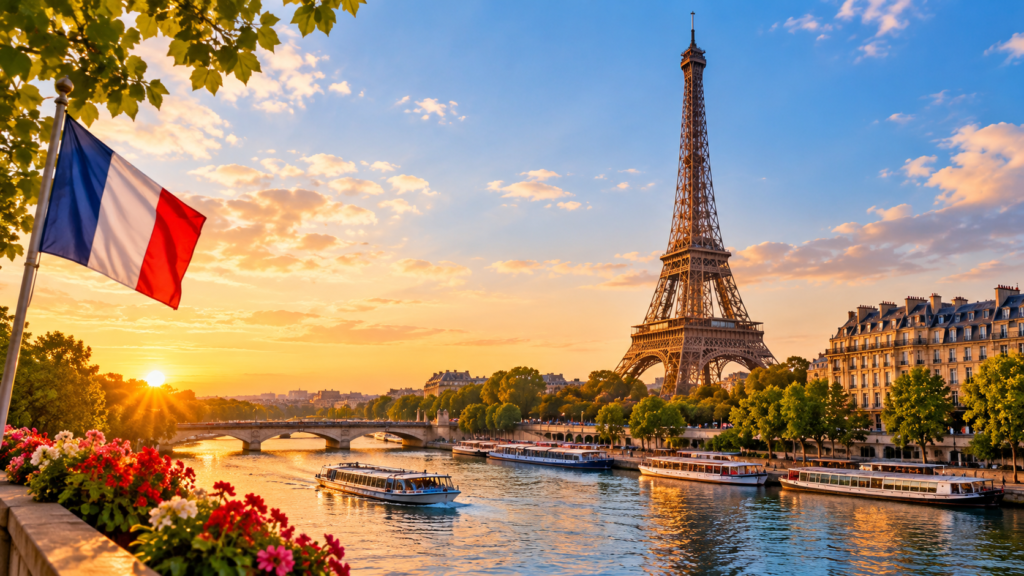
France is one of the most recognized countries in Europe, famous for its rich history, elegant architecture, delicious food, fashion, art, and beautiful landscapes. From the romantic streets of Paris to the sunny beaches of the French Riviera, the country offers a wide variety of experiences for visitors and residents.
Located in Western Europe, France has influenced global culture through literature, philosophy, science, cuisine, and the arts. Its historic cities, impressive castles, mountain villages, and coastal towns make it an interesting destination for people with different interests.
France is also an important member of the European Union. Its capital, Paris, is a major center for business, tourism, education, and international culture. Whether you are researching the country for travel, education, history, or general knowledge, understanding France means exploring much more than its famous landmarks.

Where Is France Located?
France is located in Western Europe and shares land borders with several countries, including Belgium, Luxembourg, Germany, Switzerland, Italy, Spain, and Monaco. Andorra also borders France along the Pyrenees.
The country has coastlines along the Atlantic Ocean, the English Channel, and the Mediterranean Sea. This variety of geographical features gives France everything from sandy beaches and rugged cliffs to green countryside and high mountain ranges.
Metropolitan France is often described as having a roughly hexagonal shape. The country also includes overseas territories in regions such as the Caribbean, the Indian Ocean, and the Pacific, giving it a global geographical presence.
Quick Facts About France
| Feature | Information |
|---|---|
| Official name | French Republic |
| Capital city | Paris |
| Official language | French |
| Currency | Euro (€) |
| Region | Western Europe |
| Political system | Semi-presidential republic |
| National day | July 14 |
| Famous landmark | Eiffel Tower |
| Major mountain range | French Alps |
| Well-known food | Croissants, baguettes, cheese, and pastries |
These basic facts provide a useful introduction to France before exploring its history, lifestyle, economy, and attractions.
The History of France
France has a long and complex history shaped by ancient communities, Roman rule, medieval kingdoms, revolutionary change, and modern European cooperation. Each period left its mark on the country’s architecture, language, political institutions, and cultural identity.
Ancient Gaul and Roman Influence
Before France became a unified kingdom, much of the region was known as Gaul. Celtic communities lived across the area before Roman forces expanded their control during the first century BCE.
Roman rule brought roads, towns, trade networks, and new architectural styles. Remains of Roman theatres, arenas, and monuments can still be found in places such as Nîmes and Arles. Over time, Latin influenced the development of the French language.
The Medieval Kingdom
During the Middle Ages, French kings gradually expanded their authority across different territories. Castles, fortified towns, monasteries, and grand churches became important features of the landscape.
Gothic architecture developed into a major artistic tradition, producing remarkable buildings such as Notre-Dame de Paris and Chartres Cathedral. Medieval France also experienced wars, religious changes, and the growth of trade and universities.
The French Revolution
The French Revolution began in 1789 and transformed the country’s political and social structure. It challenged absolute monarchy, promoted ideas about citizenship and equality before the law, and helped reshape political debate across Europe.
The revolution was also a period of serious conflict and instability. Its legacy remains important in discussions about democracy, rights, national identity, and the role of government.
France in the Modern Era
France experienced major changes during the nineteenth and twentieth centuries, including industrial development, colonial expansion, two world wars, and the creation of modern democratic institutions.
After the Second World War, France became a key participant in European cooperation. It was among the founding members of the European Economic Community, the predecessor of today’s European Union.
European Union
+1
Paris: The Famous Capital of France

Paris is the capital and largest city of France. It is known for its museums, historic streets, cafés, fashion houses, theatres, gardens, and distinctive architecture. The River Seine runs through the city, connecting many of its best-known sights.
The city attracts visitors interested in art, history, food, shopping, and everyday French culture. Even a simple walk through a neighbourhood can reveal traditional bakeries, bookshops, open-air markets, and elegant residential buildings.
The Eiffel Tower
The Eiffel Tower is one of the most recognizable landmarks in the world. Built for the 1889 Exposition Universelle, it was initially associated with a major engineering achievement and later became a symbol of Paris.
Visitors can enjoy views of the city from its observation levels. The surrounding Champ de Mars and nearby riverbanks also offer popular places to admire and photograph the structure.
The Louvre Museum
The Louvre is one of the world’s most famous art museums. Its collection spans many periods and civilizations, including ancient objects, European paintings, sculptures, and decorative arts.
The museum is home to the Mona Lisa, as well as countless other works. Because the collection is extensive, visitors often benefit from choosing a few sections in advance rather than attempting to see everything in a single visit.
Notre-Dame de Paris
Notre-Dame is a historic cathedral celebrated for its Gothic architecture, sculptures, stained glass, and place in French cultural life. Its construction began in the twelfth century, and the building has undergone restoration and preservation work over time.
The cathedral is located on Île de la Cité in the Seine. It remains an important religious and architectural landmark and a valuable part of Paris’s heritage.
Beautiful Regions and Places to Visit in France
France is much more than Paris. Its regions have different traditions, landscapes, cuisines, and architectural styles, so travelling beyond the capital can provide a broader understanding of the country. The official tourism portal offers destination information for cities and overseas territories.
FRANCE.FR
+1

The French Riviera
The French Riviera, also called the Côte d’Azur, stretches along part of the Mediterranean coast. It is known for sunny weather, seaside promenades, beaches, marinas, and towns with colourful architecture.
Nice is a popular base for exploring the region. Visitors can walk along the Promenade des Anglais, explore the old town, enjoy local markets, and take day trips to nearby coastal communities.
Provence
Provence is famous for its historic villages, outdoor markets, olive groves, vineyards, and landscapes associated with lavender. Its towns combine Roman remains, medieval streets, and traditional southern French architecture.
The region is especially appealing to people who enjoy countryside drives, local food, photography, and relaxed village life. Seasonal conditions affect what visitors see, so it is sensible to check flowering periods before planning a trip around lavender fields.
The French Alps
The French Alps offer dramatic mountain scenery, alpine villages, lakes, and opportunities for outdoor recreation. Chamonix is particularly well known for its setting near Mont Blanc, one of the highest mountain peaks in Western Europe.
During winter, many alpine areas welcome visitors for skiing and snowboarding. In warmer months, hiking, sightseeing, and mountain railways provide different ways to experience the landscape. Weather can change quickly at higher elevations, making local guidance and suitable equipment important.
Normandy
Normandy is a region of northern France with a rich history and a distinctive coastline. It is known for its green countryside, historic towns, traditional dairy products, and important Second World War sites.
The D-Day landing beaches are significant places of remembrance. Visitors can learn about the events of June 1944 through museums, memorials, and preserved historical locations.
Bordeaux
Bordeaux is known for elegant architecture, public squares, riverfront views, and a long association with wine production. Its historic centre includes impressive buildings that reflect the city’s commercial and cultural development.
The wider region also has coastal areas, countryside, and food traditions. Travellers who prefer architecture and history can explore the city itself without needing to visit vineyards.
Strasbourg
Strasbourg lies in northeastern France, close to the German border. Its location has helped shape a distinctive regional identity that combines French and German influences.
The historic centre includes timber-framed houses, canals, and the impressive Strasbourg Cathedral. The city is also an important location for European institutions, giving it a role in both regional life and continental cooperation.
European Union
+1
French Food and Traditional Cuisine

French cuisine is an important part of the country’s cultural identity. Meals often reflect local ingredients, regional traditions, and techniques developed over generations. France is associated with bakeries, pastry shops, cheese markets, restaurants, and long-established culinary schools.
French food varies widely by region. Coastal communities use seafood, northern areas feature hearty dishes, and southern cooking often includes olive oil, herbs, tomatoes, and Mediterranean ingredients.
Croissants and Baguettes
Croissants are flaky pastries commonly enjoyed at breakfast, while baguettes are long, crusty loaves found in bakeries throughout France. Both have become internationally recognized symbols of French food culture.
Many people buy fresh bread from a local boulangerie. A baguette may accompany a meal, be used for a sandwich, or simply be enjoyed with butter and cheese.
French Cheese
France produces a wide variety of cheeses, with different textures, flavours, and production methods. Examples include Brie, Camembert, Comté, and Roquefort.
Cheese traditions vary from one region to another. Local markets and specialist shops can introduce visitors to products they may not find at home, although some cheeses have strong flavours that take time to appreciate.
Popular French Dishes
Traditional dishes range from simple home cooking to elaborate restaurant meals. Ratatouille combines vegetables such as tomatoes, courgettes, aubergines, and peppers. Coq au vin is traditionally prepared with chicken and wine, while beef bourguignon is a slow-cooked beef dish associated with Burgundy.
Crêpes are popular in both sweet and savoury forms. In the south, bouillabaisse is a traditional fish stew associated with Marseille. These dishes show how geography and local ingredients influence French cooking.
| French food | What it is known for |
|---|---|
| Baguette | Crusty bread with a soft interior |
| Croissant | Flaky, buttery pastry |
| Ratatouille | A vegetable dish associated with Provence |
| Crêpe | Thin pancake served sweet or savoury |
| Beef bourguignon | Slow-cooked beef with a Burgundy connection |
| Quiche Lorraine | Savoury tart traditionally associated with Lorraine |
| Macarons | Delicate filled almond-based cookies |
French Dining Culture
Meals can be social occasions where family members and friends spend time together. In many places, lunch and dinner follow familiar routines, although schedules differ according to work, location, and personal preference.
Visitors should remember that not every French person follows the same dining habits. Restaurants may have set opening hours, and some smaller businesses close between meal services. Checking opening times ahead of a visit can save time.
French Culture, Art, and Fashion
France has played a major role in the development of painting, literature, philosophy, cinema, music, and fashion. Its cultural influence can be seen in museums, universities, theatres, and creative industries around the world.
Art and Museums
French museums preserve works from different periods, from classical sculpture to modern painting. Artists associated with France include Claude Monet, Edgar Degas, and Pierre-Auguste Renoir, whose work helped shape the Impressionist movement.
Art is not limited to major museums. Public squares, historic churches, smaller galleries, and regional museums also help visitors understand local history and creative traditions.
Fashion and Design
Paris has a long-standing reputation as an international fashion centre. Designers, fashion houses, textile makers, and creative professionals contribute to its influence on clothing and luxury goods.
French style is often associated with thoughtful design and attention to detail, but everyday fashion varies greatly among individuals. The country’s fashion industry includes everything from established luxury brands to independent designers and practical everyday clothing.
Literature and Philosophy
French writers and thinkers have influenced debates about society, freedom, ethics, and human experience. Famous literary figures include Victor Hugo, Alexandre Dumas, and Marcel Proust.
Their works explore themes such as justice, identity, love, social class, and historical change. Reading French literature in translation can provide insight into the country’s intellectual history, while the original language offers a different experience for learners.
Music and Cinema
France has a lively film culture and hosts internationally recognized cinema events. French cinema includes classic films, contemporary dramas, comedies, animation, and documentaries.
Music traditions range from classical composition and chanson to electronic music and modern pop. Regional music and dance also remain part of local festivals and community celebrations.
The French Language and Everyday Life
French is the official language of France and an important international language. It is used in education, public administration, business, media, and daily communication.
Learning a few French expressions can make travel easier and help visitors communicate respectfully. Useful phrases include Bonjour for hello, Merci for thank you, S’il vous plaît for please, and Excusez-moi for excuse me.
In tourist areas, some people speak English or other languages, but this should not be assumed everywhere. Starting a conversation politely in French is often appreciated, even when the speaker later switches to another language.
Everyday life in France varies between large cities, smaller towns, rural communities, and overseas territories. Public transport may be convenient in major urban areas, while a car can be useful for exploring some countryside locations. Work routines, shopping hours, housing, and local customs also differ by region.
The Economy of France
France has a diverse economy that includes services, manufacturing, agriculture, transport, technology, tourism, and creative industries. It is an important economy within the European Union and maintains extensive trade relationships with other countries.
European Union
+1
Tourism and Hospitality
Tourism supports hotels, restaurants, transport services, museums, tour operators, and many local businesses. Visitors travel to France for its cities, historical landmarks, food, coastline, countryside, and cultural events.
Tourism also creates challenges, including crowding in popular areas and pressure on local housing and public spaces. Responsible travel can help by respecting local communities, following site rules, and visiting lesser-known destinations when appropriate.
Agriculture and Food Production
Agriculture remains important to many French regions. Farms produce cereals, fruit, vegetables, dairy products, and other goods. Regional food specialities connect farming with local identity and culinary traditions.
Food production also faces changing weather patterns, market pressures, and environmental concerns. These issues influence farming practices and discussions about how to maintain reliable food supplies.
Industry and Innovation
France has established industries in areas such as aerospace, transport, energy, cosmetics, pharmaceuticals, and advanced manufacturing. Research institutions and universities contribute to science, engineering, and technological development.
The economy is not uniform across the country. Some areas are strongly connected to international business and research, while others rely more heavily on agriculture, tourism, or local manufacturing.
Education and Universities in France
France has a long educational tradition, with public schools, universities, specialist institutes, and research organisations. Its higher education system attracts students interested in subjects such as business, engineering, arts, science, hospitality, and international relations.
Paris is home to many well-known educational institutions, but opportunities are available in cities across the country. Lyon, Toulouse, Montpellier, Bordeaux, and Strasbourg also have student communities and universities.
International students should research admission requirements, language expectations, tuition fees, accommodation costs, and visa rules before applying. Official information is especially important because requirements can vary according to nationality, programme, and type of institution.
Sports and Major Events in France
Sports are a visible part of French public life. Football has a large following, while rugby, cycling, tennis, basketball, and motorsport also attract considerable interest.
The Tour de France is one of the country’s best-known sporting events. This multi-stage cycling race travels through different landscapes and often includes challenging mountain routes. It also brings international attention to towns and regions along the route.
The French Open tennis tournament, held at Roland-Garros in Paris, is another major annual event. France also hosts motorsport competitions, rugby matches, marathons, and community sporting festivals.
These events contribute to tourism and provide opportunities for people to experience the country’s sporting culture. Dates, ticket availability, and access arrangements change each year, so visitors should consult official event websites before making plans.
Best Time to Visit France
The best time to visit France depends on the places you want to explore and the activities you enjoy. The country has different regional climates, so conditions in the Alps can be very different from those on the Mediterranean coast.
Spring often brings milder temperatures and blooming gardens. Summer is popular for beaches, outdoor festivals, and sightseeing, but major tourist areas can become crowded. Autumn offers changing colours, seasonal food, and comfortable conditions in many regions.
Winter is suitable for visitors interested in mountain scenery, seasonal markets, and winter sports in appropriate locations. Some coastal attractions and smaller businesses operate on reduced schedules outside the main tourist season.
Before travelling, check local weather forecasts, transport schedules, attraction opening times, and any booking requirements.
Travel Tips for First-Time Visitors
Planning ahead can make a trip to France more comfortable and enjoyable. A little preparation helps visitors manage transport, spending, language differences, and busy tourist areas.
- Learn basic French phrases: Simple greetings and polite expressions are useful in shops, cafés, and public places.
- Use public transport where practical: Metro systems, buses, and trains can make travelling between many cities and attractions easier.
- Book popular attractions ahead: Major museums and landmarks may require timed tickets or reservations.
- Keep personal belongings secure: Stay aware of bags and valuables in crowded stations and tourist areas.
- Respect local customs: Follow signs, queue where required, and be considerate in residential neighbourhoods.
- Check travel documents: Review passport, visa, insurance, and entry requirements before departure.
- Explore beyond the capital: Regional towns and countryside can provide a wider view of French culture.
For official destination ideas and practical planning information, visit France.fr, the official tourism website. For country information, you can also consult the European Union’s France profile
Frequently Asked Questions About France
What is France famous for?
France is famous for Paris, the Eiffel Tower, its cuisine, art, fashion, historic buildings, countryside, and cultural traditions.
What language do people speak in France?
French is the official language. Other languages are also spoken by communities across the country, and some people use English, especially in international tourist areas.
What currency does France use?
France uses the euro (€), which is also the currency of many other European Union countries.
What food should visitors try in France?
Popular options include baguettes, croissants, crêpes, ratatouille, quiche Lorraine, and regional cheeses. Traditional dishes vary from one region to another.
Conclusion
France brings together historic landmarks, regional traditions, varied landscapes, celebrated cuisine, and a strong cultural influence. From exploring Paris to discovering mountain villages and Mediterranean coastlines, the country offers many ways to learn, travel, and experience European life. Understanding its regions and customs can make any visit more rewarding.