
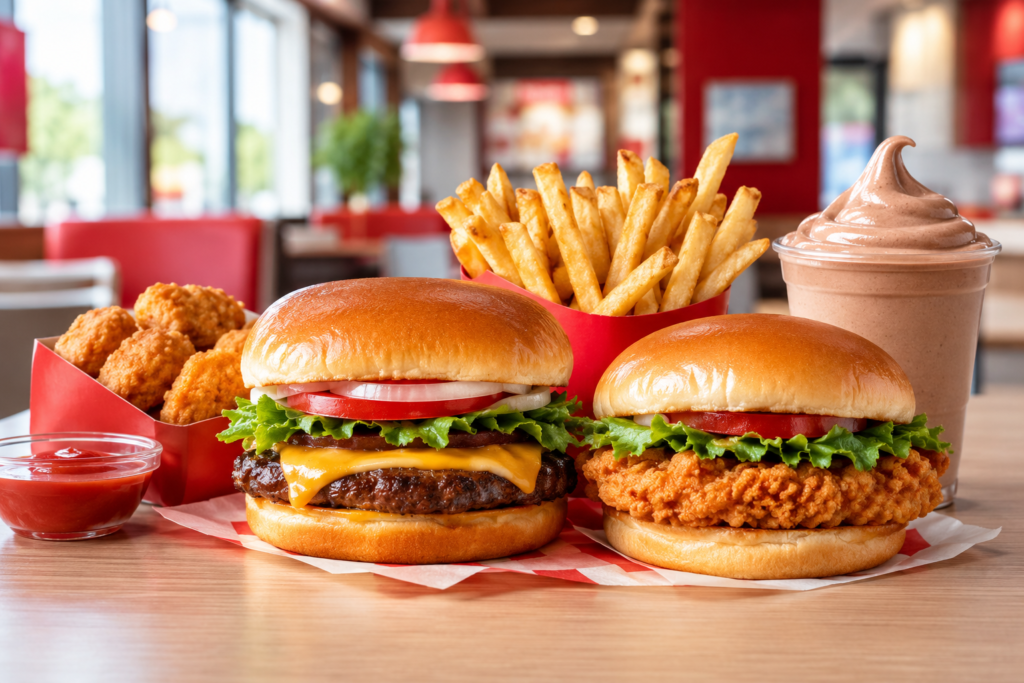
The Wendy’s Company is a well-known name in the quick-service restaurant industry. Its business combines familiar fast-food favorites, a recognizable brand identity, a large franchise network, and a strategy focused on serving customers quickly and consistently. From its beginnings in Ohio to its international restaurant operations, the company has built a business that reaches customers in different markets and through different ordering channels.
For many people, Wendy’s is associated with square hamburgers, chicken sandwiches, crispy nuggets, French fries, and its signature Frosty dessert. However, the business behind the restaurant experience is much broader than its menu. The company also manages franchise relationships, food sourcing, marketing, restaurant development, digital ordering, and long-term financial planning.
Understanding the Wendy’s Company means looking at both sides of the business: what customers experience at restaurants and how the organization operates behind the scenes. These two sides are closely connected because customer satisfaction, restaurant efficiency, brand reputation, and financial performance can influence one another.
This guide explains the company’s background, business structure, popular products, marketing strategy, franchise model, competition, challenges, and growth opportunities. It also explores why the brand remains relevant in a crowded market and what readers should understand when researching its corporate performance.

Image placement: Feature image. Suggested caption: A fast-food menu featuring burgers, chicken, fries, nuggets, and frozen desserts.
What Is the Wendy’s Company?
The Wendy’s Company is the parent company behind the Wendy’s restaurant brand. It operates and franchises quick-service restaurants that serve hamburgers, chicken products, sides, drinks, desserts, and other menu items. The company’s corporate structure supports restaurant operations in the United States and international markets.
The organization is publicly traded on the Nasdaq stock market under the ticker symbol WEN. This makes the company relevant not only to customers and restaurant employees but also to investors, analysts, franchise operators, suppliers, and people who follow the restaurant industry.
Wendy’s operates through a combination of company-managed restaurants and independently operated franchise locations. Under this structure, the corporate organization establishes brand standards, develops products, manages marketing programs, and provides operational guidance. Franchisees operate their restaurants under agreements that define their responsibilities and the conditions for using the Wendy’s brand.
This distinction matters because the parent company does not directly operate every restaurant carrying its name. Restaurant-level decisions, staffing arrangements, and daily operations can vary according to the location and its operator, while the overall brand follows common standards.
The Wendy’s Company is therefore more than a collection of fast-food outlets. It is a restaurant business that coordinates branding, product development, restaurant systems, franchise relationships, and financial management across a broad network.
The History of Wendy’s
The history of Wendy’s begins with founder Dave Thomas, who opened the first Wendy’s restaurant in Columbus, Ohio, in 1969. His goal was to establish a hamburger restaurant that emphasized food quality, straightforward service, and a welcoming customer experience.
The original restaurant helped establish the identity that the brand would develop over time. The square hamburger became a recognizable feature, while the menu expanded to include other products that appealed to customers seeking a convenient meal.
As the restaurant gained recognition, the business grew beyond its original location. Franchising helped the brand enter additional communities without requiring the parent company to fund and manage every new restaurant itself. This approach became an important part of Wendy’s development.
The company’s history has also included corporate changes, brand development, leadership transitions, and adjustments to its operating strategy. Its current identity reflects decades of experience in the competitive quick-service restaurant market.
Readers who want to verify the company’s historical background can consult the official Wendy’s company history and corporate information.
Dave Thomas and the Founder’s Vision
Dave Thomas played a central role in creating Wendy’s identity. His background in the restaurant business influenced his approach to menu design, service, and restaurant management.
The brand’s name was inspired by his daughter, Melinda Lou Thomas, who was nicknamed Wendy. That personal connection helped give the restaurant a memorable identity and a story that customers could associate with the business.
Thomas’s influence extended beyond the menu. He became closely associated with the company’s public image and later supported charitable work, including efforts connected to adoption and children waiting in foster care.
His legacy remains an important part of the Wendy’s story. Founder-led businesses often benefit from a clear origin story because it gives customers a way to understand the company’s values and how its identity developed.
How Wendy’s Developed Its Brand Identity
A successful restaurant brand needs more than a recognizable name. It also needs a consistent experience that customers can identify across locations.
Wendy’s built its identity around distinctive food, recognizable visual branding, advertising, and a conversational style of communication. Its square hamburgers and signature dessert helped create products that were easy to remember.
Over time, the company continued to adapt its presentation and marketing to changing customer expectations. Digital platforms, mobile ordering, social media, and delivery services have become important channels for reaching customers.
The central challenge is to modernize the brand without losing the qualities that made it recognizable in the first place. Customers want convenience and new choices, but they also expect familiar favorites to remain available and consistent.
The Wendy’s Company Business Model
The Wendy’s Company uses a business model that combines restaurant sales with revenue connected to franchising. This structure allows the organization to generate income through different parts of its restaurant network.
Company-operated restaurants generate revenue from meals, beverages, desserts, and other products sold directly to customers. Franchise operations create additional revenue through contractual arrangements, which may include royalties, franchise fees, rent, and contributions to advertising programs.
The exact financial treatment of these revenue streams depends on the applicable agreements and accounting rules. Advertising fund collections, for example, should not automatically be treated as equivalent to ordinary profit because the funds may be used for designated marketing activities.
Franchising can help a restaurant brand expand while limiting the capital required from the parent company for each additional location. Franchisees generally invest in their restaurants and manage daily operations under the brand’s standards.
However, this model also requires strong coordination. The company must provide guidance, monitor compliance, support restaurant operators, and protect customer confidence in the brand.
Company-Operated Restaurants
Company-operated restaurants are managed directly by the organization rather than by independent franchise owners. These locations give the company direct involvement in restaurant operations and customer service.
They can also help the business test menu changes, service improvements, technology, and operating procedures. Information gathered from these restaurants may inform decisions that affect the wider restaurant system.
Direct operation has financial trade-offs. The company is responsible for expenses such as restaurant labor, food, occupancy, maintenance, and other operating costs. When sales increase efficiently, these locations can contribute positively to results. When expenses rise or customer demand weakens, margins can come under pressure.
For this reason, management must pay attention to sales, customer traffic, labor productivity, food waste, and operating consistency.
Franchise Operations
Franchising is a major part of the Wendy’s business model. A franchisee receives permission to operate a restaurant under the brand and agrees to follow contractual requirements covering matters such as food preparation, branding, operating procedures, and quality standards.
Franchisees usually provide much of the investment needed to open and operate their locations. In return, they benefit from the brand’s recognition, established menu, operating systems, marketing, and support.
The parent company receives franchise-related revenue according to the terms of its agreements. This arrangement can support expansion while distributing some of the costs and responsibilities of restaurant ownership.
Nevertheless, franchising is not a guarantee of success. Franchise operators must manage local expenses, recruit employees, maintain service standards, and attract customers. Poor performance at individual locations can also affect public perceptions of the overall brand.
How the Two Operating Models Work Together
Company-operated restaurants and franchise restaurants serve different but complementary purposes.
| Business area | Company-operated restaurants | Franchise restaurants |
|---|---|---|
| Daily management | Managed directly by the company | Managed by franchise operators |
| Restaurant investment | Funded or arranged by the company | Generally funded by franchisees |
| Main restaurant revenue | Sales to customers | Sales retained by the franchisee, subject to contractual payments |
| Corporate revenue | Restaurant sales and related income | Royalties, fees, rent, and other contractual revenue |
| Brand standards | Follow corporate requirements | Must follow franchise requirements |
| Operating costs | Borne directly by the company | Primarily borne by the franchise operator |
| Expansion approach | Requires direct operating investment | Can enable growth using franchisee investment |
The two models require different kinds of oversight, but both depend on customer satisfaction. A strong brand can help attract customers, while good restaurant execution helps protect the brand’s reputation.
Wendy’s Menu and Signature Products
The menu is central to the Wendy’s identity. The company offers familiar fast-food categories while adjusting selections, promotions, and combinations according to market conditions.
Although individual products and availability vary by country and location, the brand is widely associated with hamburgers, chicken sandwiches, nuggets, fries, beverages, and Frosty desserts.
Customers may choose Wendy’s for a quick lunch, a convenient dinner, a snack, or a meal shared with friends and family. Menu combinations and different portion sizes give the business opportunities to serve several customer needs.
Hamburgers and Cheeseburgers
Hamburgers are among the most recognizable products associated with Wendy’s. The company is particularly known for its square burger patties, which distinguish the brand from competitors that use other shapes.
Burger offerings typically combine a patty with a bun, toppings, sauces, and optional cheese or other ingredients. More elaborate sandwiches can appeal to customers who want a richer meal, while simpler options can serve customers looking for a familiar choice.
Wendy’s promotes fresh-beef burgers in specified markets. However, product sourcing and availability depend on geography, and claims about ingredients should always be checked against current official information for the relevant country.
The company must also balance product quality with speed, affordability, food safety, and consistent preparation. A burger may be appealing on the menu, but its overall success depends on how reliably restaurants prepare and serve it.
Chicken Sandwiches and Nuggets
Chicken products broaden Wendy’s appeal beyond traditional hamburgers. The menu includes chicken sandwiches and nuggets, with different flavors and preparations depending on the location.
Chicken sandwiches offer customers an alternative main meal, while nuggets can work as a snack, a side, or part of a larger order. Dipping sauces provide another way to customize the experience.
Chicken products also place Wendy’s in direct competition with restaurant brands that focus heavily on poultry. The company must consider flavor, texture, serving temperature, portion size, and value when developing and promoting these products.
Consistency matters just as much as variety. Customers are more likely to return when the food they order meets their expectations across different visits.

Image placement: Chicken menu section. Suggested caption: Chicken sandwiches, nuggets, and sides are important alternatives to traditional burgers.
French Fries and Side Items
French fries are a familiar part of the Wendy’s meal experience. Customers often order them alongside burgers or chicken sandwiches, making sides an important part of the average order.
Sides also provide opportunities for menu combinations and promotional offers. A customer who chooses a main sandwich may add fries, a drink, or another item to create a complete meal.
The challenge is to deliver consistent taste, texture, portion size, and temperature. Fries that become cold or lose their crispness during delivery can disappoint customers, even when the main sandwich is prepared well.
Other side items can help diversify the menu. Their availability depends on local preferences, restaurant capabilities, and the company’s current product strategy.
The Frosty Dessert
The Frosty is one of Wendy’s best-known signature products. It occupies a distinct position between a traditional milkshake and a soft frozen dessert, helping the brand offer something memorable beyond its savory menu.
The product can contribute to meal combinations and add-on purchases. It also provides a recognizable brand element that customers may associate with childhood memories, family meals, or visits with friends.
Signature items are valuable because they can distinguish a restaurant from competitors with similar core menus. However, the business must maintain consistent quality and manage ingredients, storage, serving procedures, and local availability.
Breakfast, Drinks, and Other Options
Breakfast and beverage offerings can help Wendy’s reach customers at different times of day. Breakfast gives a restaurant brand an opportunity to generate sales outside traditional lunch and dinner periods, although success depends on local demand and operating costs.
Drinks can complement meals and provide customers with different choices. Menu availability may include soft drinks, coffee, and other beverages, depending on the market.
Restaurants must determine which products are appropriate for their customer base and location. A larger menu can increase choice, but it can also complicate inventory management, preparation, staff training, and service speed.
A well-designed menu balances variety with operational simplicity.
Wendy’s Company Marketing Strategy
Marketing helps Wendy’s communicate its identity, promote its menu, attract new customers, and encourage existing customers to return. The company’s approach includes traditional advertising, digital campaigns, product promotions, brand storytelling, and communication through social media.
The challenge for a large restaurant brand is to remain familiar without becoming predictable. Customers expect recognizable favorites, but they also notice new products, changing prices, seasonal promotions, and competitors offering similar meals.
Wendy’s marketing strategy therefore needs to connect its established identity with the interests of modern customers. A campaign may focus on taste, convenience, value, product innovation, or the personality of the brand.
Building a Recognizable Brand
A strong brand helps customers recognize a restaurant before they even see the menu. Wendy’s uses distinctive visual elements, its name, familiar products, and a recognizable public identity to create that connection.
Brand recognition can make it easier for customers to choose a restaurant when several alternatives are available. However, awareness alone is not enough. The restaurant must also provide a satisfying experience that encourages customers to return.
This means advertising and operations need to support one another. If marketing promises a particular experience but the restaurant delivers inconsistent food or slow service, the gap can damage trust.
A successful strategy makes the brand promise understandable and then works to deliver it across the restaurant network.
Social Media and Digital Communication
Social media allows Wendy’s to communicate directly with customers, share promotions, announce products, and participate in online conversations.
The brand has become known for a conversational and sometimes playful online personality. This approach can help a restaurant appear more approachable than a company that communicates only through formal advertising.
Digital communication also gives businesses opportunities to listen to customer feedback. Questions, comments, and complaints can reveal problems that may not be obvious from sales figures alone.
However, online engagement should not be confused with business performance. A popular post does not necessarily translate into more restaurant visits or stronger profitability. The company needs to evaluate whether its digital campaigns contribute to meaningful results.
Advertising and Promotional Offers
Promotions can encourage customers to try a new product or visit a restaurant more frequently. Offers may include meal combinations, limited-time items, app-based deals, and discounts available through participating locations.
Value-oriented promotions are especially relevant when customers are concerned about food prices and household budgets. They can help a brand remain competitive, but they must be designed carefully.
Discounting too heavily can reduce the revenue earned per transaction. A promotion can also become less effective if customers begin to expect discounts before making a purchase.
Wendy’s therefore needs to balance affordability with sustainable restaurant economics. A good offer should attract customers while giving the business a reasonable opportunity to cover its costs.
Digital Ordering and Customer Convenience
Digital ordering has changed how customers interact with quick-service restaurants. Instead of always ordering at a counter or drive-through, customers may use mobile apps, restaurant websites, delivery platforms, or self-service kiosks where available.
For Wendy’s, digital channels can support convenience and help customers discover menu options before arriving at a restaurant. They may also provide access to offers, order customization, and loyalty-related features where supported.
Digital systems can benefit restaurant operations as well. When implemented effectively, they can help organize incoming orders, reduce certain ordering errors, and provide information about customer preferences.
Nevertheless, technology must be reliable and easy to use. Complicated checkout processes, inaccurate menus, unclear fees, and delayed order updates can frustrate customers rather than improve their experience.
Mobile Apps and Online Ordering
A mobile ordering system can allow customers to review menu options, customize an order, and select a suitable pickup or delivery method. The exact functions depend on the current app, local market, and participating restaurant.
For the company, digital ordering creates another way to connect marketing with restaurant transactions. Promotions can be presented alongside menu items, while ordering data can help the business evaluate product demand.
Privacy and data protection also matter. Customers should understand how their information is handled, and the company must follow applicable privacy and security requirements.
The most useful digital tools solve real customer problems. Convenience should be the starting point, not simply the addition of more technology.
Delivery Services
Delivery can make Wendy’s more accessible to customers who prefer to eat at home, at work, or in another location away from the restaurant.
Third-party delivery services can extend a restaurant’s reach without requiring the company to build an entirely separate delivery network. However, these arrangements may involve fees, different customer-service responsibilities, and less direct control over the delivery experience.
Food quality during transportation is another consideration. Burgers, fries, chicken, and frozen desserts may respond differently to travel time and temperature changes.
Packaging, preparation timing, order accuracy, and coordination with delivery partners can help reduce these problems. Customers judge the overall experience, even when part of the service takes place outside the restaurant’s direct control.

Image placement: Digital ordering section. Suggested caption: Mobile ordering provides customers with another way to access restaurant menus and offers.
Drive-Through Service and Speed
Drive-through service remains an important part of the quick-service restaurant model. Customers often choose this option because they want a meal without leaving their vehicle.
Speed matters, but it is not the only measure of quality. Accurate orders, clear communication, food temperature, and a smooth payment process also influence customer satisfaction.
Restaurants need to coordinate staff, equipment, preparation stations, and incoming orders to keep service moving. A fast drive-through that frequently gives customers incorrect orders is not delivering a consistently good experience.
Technology may support order management, but staff training and well-designed processes remain essential.
The Wendy’s Company Franchise Model Explained
Franchising is one of the most important parts of the Wendy’s business. It allows the brand to operate across many locations through agreements with business owners who invest in and manage restaurants.
For people researching the company, understanding franchising is useful because restaurant growth does not always mean the parent company has opened and funded every new location itself.
A franchise system distributes responsibilities. The corporate organization establishes standards and provides brand-related support, while franchisees handle many day-to-day activities, including staffing, local operations, and restaurant-level expenses.
The relationship must work for both sides. Franchisees need an operating model that gives them a reasonable chance of success, while the parent company needs restaurants that protect the reputation and consistency of the brand.
What Does a Wendy’s Franchisee Do?
A franchisee is an approved business operator who runs a restaurant under the Wendy’s brand. Depending on the agreement and local requirements, the franchisee may be responsible for financing the location, hiring employees, managing inventory, maintaining facilities, and meeting operating standards.
Franchisees also need to understand their local market. Customer preferences, labor availability, property costs, traffic patterns, and nearby competition can affect the performance of a restaurant.
Operating a recognized brand does not remove ordinary business risks. A location still needs enough customer demand to support its expenses and contractual obligations.
Potential franchisees should carefully review official requirements, investment expectations, financing needs, operating responsibilities, and disclosure documents before making any decision.
Why Companies Use Franchising
Franchising can support expansion because the parent company does not have to supply all the capital required for every restaurant. Local operators may also bring knowledge of their markets and experience managing businesses.
The model can create opportunities for growth across cities and countries, provided the brand can find suitable operators and maintain consistent standards.
For the parent company, franchise-related income can be different from revenue generated by directly operating a restaurant. The structure may also change the company’s exposure to restaurant-level expenses and investment requirements.
Even so, franchising is not entirely passive. The corporate organization needs to support franchisees, maintain operating standards, monitor brand performance, and address problems that arise across the network.
Challenges Facing Franchise Operators
Franchise operators face many of the same pressures as other restaurant businesses. Food costs can change, wages may rise, and customers may become more price-sensitive.
Staff turnover can create additional training expenses and affect service consistency. Equipment problems, building maintenance, supply disruptions, and changes in local demand can also put pressure on a location.
Franchisees must also follow brand standards while managing their individual businesses. A new promotion or menu change may create additional operational requirements, so communication between the corporate organization and restaurant owners is important.
A healthy franchise relationship depends on clear expectations, practical support, reliable communication, and a business model that can work under local conditions.
Wendy’s Company Financial Performance
Financial performance is an important subject for anyone researching the Wendy’s Company from a business or investment perspective. Revenue, operating profit, restaurant sales, expenses, cash flow, and capital allocation can all help explain how the company is performing.
These measures should be evaluated together rather than in isolation. Revenue can increase while profitability weakens if costs rise faster than sales. Likewise, a change in reported revenue does not always provide a complete picture of customer demand because the balance between company-operated and franchised restaurants affects the figures.
The company publishes financial results and investor materials through its official investor relations website. Those reports are the best starting point for checking the latest reported figures and management’s explanation of business conditions.
Understanding Company Revenue
The Wendy’s Company receives revenue from its directly operated restaurants and from its franchise relationships. The contribution of each source depends on the restaurant network and the terms of the relevant agreements.
Company-operated restaurant sales generally include the full sales value recorded by those locations, subject to applicable accounting rules. Franchise-related revenue may include royalties, fees, rent, and other contractual amounts.
This difference is important when comparing Wendy’s with businesses that operate a different proportion of their restaurants directly.
For a useful analysis, readers should check the company’s income statement, segment disclosures, and notes to its financial statements. Those documents help explain which activities generate revenue and how the company presents its results.
Restaurant Sales and Customer Traffic
Restaurant sales depend on several factors, including the number of transactions, average spending per visit, pricing, product mix, and promotional activity.
Customer traffic is especially important. If fewer people visit a restaurant, the business may struggle to offset its fixed expenses, even when menu prices remain unchanged.
Average spending can increase when customers purchase additional items or choose higher-priced meals. However, a higher average check does not necessarily mean the restaurant is attracting more customers.
Analysts therefore look at several measures together. Same-restaurant sales, customer traffic, average check, and systemwide sales can each offer a different perspective on the business.
Costs and Operating Margins
Restaurant businesses have a range of expenses, including food, packaging, labor, occupancy, utilities, equipment, and maintenance. The relative importance of these costs varies by location and operating model.
Food costs can change with commodity prices, supplier conditions, and product specifications. Labor costs can be affected by wage levels, staffing needs, training, and local employment conditions.
When expenses rise faster than sales, operating margins can weaken. Management may respond through purchasing improvements, waste reduction, better scheduling, menu adjustments, or other operating changes.
Cost management must not come at the expense of food safety or service quality. Reducing waste and improving processes can be constructive, while cutting essential staffing or compromising preparation standards can damage the customer experience.
Cash Flow and Capital Allocation
Cash flow helps show how money moves through the business. Operating cash flow reflects cash generated by operating activities, while investing and financing activities show other important uses and sources of funds.
Capital allocation concerns how management chooses to use available financial resources. Potential uses include restaurant investment, technology, debt management, shareholder returns, and other corporate priorities.
These decisions involve trade-offs. Investment in a restaurant may support future sales, but it requires funding today. Shareholder distributions may appeal to investors, but the company must also maintain financial flexibility and meet its operating needs.
Readers should avoid judging capital allocation from a single announcement. The appropriate assessment depends on cash flow, debt obligations, future investment requirements, and the company’s broader financial position.
Where to Find Official Financial Reports
The most reliable place to review Wendy’s financial information is its official investor relations website.
For additional verification, readers can review filings available through the U.S. Securities and Exchange Commission, including annual and quarterly reports.
These sources help readers distinguish reported financial results from estimates, promotional claims, and third-party commentary.
Wendy’s Company Stock and Investor Information
The Wendy’s Company is publicly traded under the ticker WEN. Its stock is relevant to investors who follow the restaurant industry, consumer spending, franchise-based businesses, and publicly listed food-service companies.
However, a well-known restaurant brand is not automatically a good investment at every price. Stock performance depends on what investors expect from the business, how the company performs against those expectations, and broader conditions in the financial markets.
Anyone researching Wendy’s company stock should separate the popularity of the restaurant from the financial characteristics of the shares. Customers may enjoy the menu, but investment decisions require a different kind of analysis.
Factors That Can Influence Wendy’s Stock
Several business factors can affect investor expectations.
- Restaurant sales: Changes in customer traffic, pricing, and average spending can influence reported performance.
- Profit margins: Food, labor, rent, and other costs affect how much revenue translates into operating profit.
- Franchise performance: The health of franchise operators can influence restaurant development and royalty-related revenue.
- International expansion: Growth in overseas markets may create opportunities, but it can also introduce additional operating and currency risks.
- Brand reputation: Customer satisfaction and public perception can affect demand over time.
- Capital allocation: Debt management, restaurant investment, and shareholder distributions can influence how investors assess the business.
- Economic conditions: Consumer confidence and spending patterns can affect demand for restaurant meals.
These factors interact with one another. For example, a company may attract more customers through promotions but experience weaker margins if the discounts are too costly.
How to Research Wendy’s Stock
A practical starting point is the company’s investor relations website. Readers can review earnings announcements, quarterly reports, annual filings, and management commentary.
It is also useful to compare the company’s results across several reporting periods. A single quarter may reflect unusual expenses, temporary changes in customer demand, or other factors that do not represent the long-term direction of the business.
Investors should also consider debt, cash flow, valuation, competitive conditions, and potential risks. No single financial metric can provide a complete assessment.
The Wendy’s investor relations website provides official company information. It should be used alongside independent financial research rather than treated as a guarantee of future performance.
Wendy’s Company Global Presence
Wendy’s operates in the international quick-service restaurant market through a combination of company-operated restaurants and franchise locations. International markets can provide opportunities to reach new customers, develop regional menu options, and build brand awareness beyond the company’s established home market.
Expansion is not simply a matter of opening restaurants in more countries. Each market has its own customer preferences, regulations, food supply systems, labor conditions, and competitive environment.
The company must determine how to maintain a recognizable brand while responding to these differences. A product that performs well in one country may need adjustments in another market to reflect local tastes and purchasing habits.
International Growth Opportunities
International markets can create new sources of restaurant sales and franchise-related revenue. They may also help diversify the company’s presence across different economies.
Franchise partnerships can be particularly useful when entering markets where local knowledge is important. Experienced local operators may understand property availability, consumer preferences, regulations, and supply networks better than a company entering independently.
However, international growth carries risks. Currency movements can affect reported results, while economic uncertainty and changes in local regulations can influence operating conditions.
Successful expansion requires careful market selection, suitable franchise partners, reliable suppliers, and consistent restaurant execution.
Adapting to Local Customer Preferences
Customer preferences differ across countries and communities. Taste, portion sizes, dining habits, price expectations, and preferred ingredients can vary significantly.
Restaurant brands often respond by adjusting selected menu items, promotions, and product availability while preserving their central identity.
For Wendy’s, the challenge is to keep the brand recognizable without assuming that every market behaves like the United States. Local research and customer feedback can help the company understand which products and service formats are most appropriate.
Adaptation should also be practical. Introducing too many unique products can complicate purchasing, preparation, inventory, and staff training.
The best approach balances local relevance with a manageable and consistent restaurant operation.
Image placement: Global operations section. Suggested caption: Restaurant design and convenient access are important parts of the quick-service dining experience.
Wendy’s Company Competitors
The fast-food market is highly competitive. Wendy’s competes with hamburger chains, chicken-focused restaurants, broader quick-service brands, and local businesses that offer convenient meals.
Competition can vary by location. In one area, a customer may have several major burger chains nearby. In another, the strongest alternatives may be local restaurants, convenience stores, or delivery-first food businesses.
For this reason, Wendy’s cannot rely on brand recognition alone. It must continue to offer products, service, convenience, and prices that make sense to its target customers.
Competition With McDonald’s
McDonald’s is a major competitor in the hamburger quick-service market. Both businesses offer recognizable burger menus, meal combinations, drive-through service, and convenient ordering options.
Their strategies and customer experiences are not identical, but customers may compare them when choosing where to eat.
Wendy’s can differentiate itself through its signature products, menu positioning, promotional campaigns, and brand personality. McDonald’s benefits from its own extensive restaurant network, established brand recognition, and broad menu presence.
Neither brand wins every customer or every market. Local pricing, restaurant convenience, service quality, and product preferences can all influence individual choices.
Competition With Burger King
Burger King is another direct competitor in the burger category. The two brands compete for customers seeking hamburgers, chicken products, meal combinations, and convenient service.
When customers compare the businesses, they may consider taste, price, portion size, promotional deals, availability, and the quality of the restaurant experience.
Wendy’s needs to maintain a clear reason for customers to choose its menu. That reason may involve a preferred product, a convenient location, a good offer, or confidence in the quality of service.
In a crowded market, the ability to deliver consistently is often as important as the ability to attract attention.
Competition With Chicken-Focused Chains
Chicken-focused restaurant brands compete for customers who prefer poultry rather than hamburgers. Their menus may emphasize sandwiches, tenders, nuggets, sauces, or other chicken products.
Wendy’s competes in this space through its own chicken offerings. However, customers may compare specialized chicken restaurants with a different set of expectations, particularly when they are looking for a particular flavor or preparation style.
A diversified menu gives Wendy’s the opportunity to serve customers with different preferences, but it also means the company must manage several product categories effectively.
Local Restaurants and Delivery-First Businesses
Independent restaurants can compete effectively by offering local flavors, personal service, specialized menus, or competitive pricing.
Some customers prefer local businesses because of convenience, familiarity, or a particular dining experience. Delivery-first businesses can also compete by making meals accessible through online ordering platforms.
Large restaurant brands have advantages in marketing, purchasing systems, standardized procedures, and recognition. Local competitors may have more flexibility in adapting to their communities.
The competitive environment therefore includes much more than a comparison between large national chains.
SWOT Analysis of the Wendy’s Company
A SWOT analysis organizes a company’s internal strengths and weaknesses alongside external opportunities and threats. It can help readers understand the major factors that may influence Wendy’s business direction.
The framework is a starting point rather than a prediction. Conditions can change, and the importance of each factor depends on the company’s current results and market environment.
| Category | Key considerations |
|---|---|
| Strengths | Recognizable brand, signature products, established franchise network, broad restaurant experience |
| Weaknesses | Dependence on restaurant execution, exposure to food and labor costs, potential inconsistency across locations |
| Opportunities | Digital ordering, improved customer convenience, international development, menu innovation |
| Threats | Intense competition, changing consumer spending, inflation, supply disruptions, changing food preferences |
Strengths of Wendy’s
Brand recognition is an important advantage. Customers who already know the restaurant may be more willing to consider it when choosing a quick meal.
The company’s signature menu items also help distinguish it from businesses that sell similar products. Its franchise network supports a broad presence without requiring the parent company to finance every restaurant directly.
Experience in the quick-service industry provides another advantage. Established operating systems, supplier relationships, marketing resources, and restaurant procedures can support the business when they are managed effectively.
These strengths still require investment and attention. Brand recognition can weaken if customers repeatedly experience poor service or believe that the menu no longer offers sufficient value.
Weaknesses of Wendy’s
Restaurant operations are complicated. The company must manage product quality, staffing, inventory, equipment, and service standards across a large network.
Franchise-based growth creates its own challenges because individual restaurants are operated by different business owners. The company needs effective systems to help franchisees maintain standards and respond to operational problems.
The business is also exposed to costs that can change over time. If food, wages, utilities, and occupancy become more expensive, restaurants may face pressure to raise prices or find operating efficiencies.
Customers may respond negatively when they believe that prices have increased beyond the value they receive. Balancing affordability and profitability is therefore an ongoing challenge.
Opportunities for Growth
Digital ordering offers ways to make purchasing more convenient and connect customers with relevant offers. Better order management and customer feedback systems may also help the business identify operational improvements.
Menu development creates another opportunity. New products and variations can attract attention, encourage trial purchases, and help the company serve different customer preferences.
International markets may provide further opportunities when the company can identify suitable locations and reliable operating partners.
Restaurant improvements can also support growth. Better layouts, equipment, service procedures, and staff training may improve customer satisfaction without requiring constant menu expansion.
Threats Facing the Business
Competition is a continuing threat because customers can easily compare restaurant brands and switch between alternatives.
Economic pressure may cause some customers to reduce restaurant visits or select lower-priced meals. Food supply disruptions, changing labor conditions, and rising operating expenses can also affect performance.
Consumer preferences may change over time. Customers may place greater importance on convenience, ingredient information, affordability, or other factors that influence restaurant choice.
Wendy’s needs to monitor these developments and adjust its strategy without losing the qualities that distinguish the brand.
Customer Experience and Service Quality
Customer experience includes every interaction a person has with a restaurant, from discovering the menu to receiving an order and contacting customer service afterward.
Food quality is a major part of that experience, but it is not the only factor. Customers also care about cleanliness, order accuracy, waiting times, staff communication, pricing transparency, and the ease of correcting a problem.
A restaurant can offer an appealing menu and still disappoint customers if the service is unreliable. Conversely, smooth service can make an ordinary meal feel convenient and satisfying.
Food Quality and Consistency
Customers generally expect familiar products to remain consistent across visits. Differences in preparation, serving temperature, portion size, or presentation can create uncertainty.
Consistency depends on clear preparation procedures, appropriate equipment, ingredient handling, staff training, and quality checks.
Restaurant operators also need to follow food safety requirements. Proper storage, cooking, cleaning, and handling procedures protect customers and help maintain trust.
A strong food quality program is not simply a marketing claim. It requires routine execution and accountability at restaurant level.
Cleanliness and Restaurant Environment
Cleanliness influences customer confidence. Dining areas, restrooms, ordering counters, food preparation areas, and pickup spaces all contribute to the overall impression.
A restaurant that looks organized and well-maintained can make customers feel more comfortable. Poor maintenance or visible cleanliness problems may undermine confidence, even when the food is satisfactory.
The company and its franchise operators need suitable cleaning procedures, staff responsibilities, maintenance schedules, and systems for addressing problems.
Restaurant design matters as well. Clear signs, accessible ordering areas, suitable seating, and well-organized pickup points can improve the customer journey.
Handling Customer Complaints
Complaints can provide useful information about problems that need attention. Customers may report incorrect orders, long waits, missing items, pricing concerns, or difficulties with digital ordering.
A helpful response should acknowledge the issue, explain the available resolution, and direct the customer to the appropriate support channel when necessary.
Restaurants also benefit from looking for patterns. If the same complaint appears repeatedly, it may indicate a process problem rather than an isolated mistake.
Effective complaint handling can help preserve customer trust, while repeated failures to respond may encourage customers to choose another restaurant.
Wendy’s Company and Sustainability
Sustainability is an increasingly important topic for large restaurant businesses. Food sourcing, packaging, energy use, waste management, and supply chain practices can influence environmental performance as well as operating costs.
For a company with a broad restaurant network, improvements at individual locations can become meaningful when applied consistently across the system. However, sustainability claims should be evaluated through specific goals, reported results, and transparent methods rather than broad statements alone.
Wendy’s publishes corporate responsibility information covering areas such as food, people, environmental considerations, and franchise support. Readers can review the company’s official corporate information and available responsibility reports for further details.
Responsible Food Sourcing
Food sourcing involves choosing suppliers, defining ingredient requirements, maintaining traceability, and ensuring that products meet relevant standards.
Restaurant companies need dependable supply chains because ingredients must arrive safely, consistently, and in sufficient quantities. Supplier problems can affect both the menu and restaurant operations.
Responsible sourcing can include expectations relating to product quality, supplier conduct, animal welfare where applicable, and compliance with relevant laws. The exact standards depend on the ingredient and market.
For Wendy’s, maintaining reliable sourcing across a large restaurant system requires coordination among suppliers, distribution partners, corporate teams, and franchise operators.
Packaging and Waste Reduction
Packaging helps protect food, maintain hygiene, and make takeaway orders easier to transport. However, disposable packaging can create environmental challenges when it is not designed or managed responsibly.
Restaurant businesses can examine packaging materials, portion planning, recycling availability, and opportunities to prevent unnecessary waste.
Food waste is another important issue. Accurate forecasting, inventory rotation, appropriate storage, and careful preparation can help reduce the amount of food that goes unused.
Waste reduction can also improve operational efficiency, although food safety requirements must always take priority. Restaurants should never compromise safe handling practices to reduce disposal.
Energy and Restaurant Operations
Restaurants use energy for refrigeration, cooking, heating, cooling, lighting, and other equipment. Efficient equipment and well-managed operating procedures can help control consumption.
Maintenance also matters. Poorly maintained refrigeration or cooking equipment may use more energy and create reliability problems.
Large restaurant networks may explore efficiency improvements across buildings and equipment, but the results depend on local facilities, usage patterns, and the resources available to operators.
For readers evaluating sustainability performance, published targets should be compared with actual progress. It is also important to distinguish company-wide results from initiatives that apply only to selected locations or markets.
Wendy’s Company Employees and Workplace Culture
Employees influence the daily customer experience. They prepare food, manage orders, maintain cleanliness, communicate with customers, and keep restaurant operations moving.
A large restaurant system needs to recruit and train employees while creating practical working conditions. The quality of these systems can affect service speed, order accuracy, staff retention, and customer satisfaction.
The Wendy’s Company and its franchise operators have different employment responsibilities depending on the restaurant’s ownership and management structure. This distinction is important when discussing staffing policies or workplace experiences.
https://magazineworker.com/helen-branswell/
Employee Training and Development
Training helps employees understand food preparation procedures, customer service expectations, safety requirements, and restaurant systems.
New employees need clear instructions and opportunities to practice their responsibilities. Experienced employees may also need additional training when menus, technology, or operating procedures change.
Good training can reduce avoidable errors and help employees respond more confidently during busy periods. It can also make expectations clearer for supervisors and restaurant managers.
Training is most effective when it is supported by realistic staffing levels and appropriate equipment. Employees cannot consistently deliver fast service if the restaurant’s systems or resources make the work unnecessarily difficult.
Workplace Safety and Well-Being
Restaurant work can involve fast-paced activity, hot equipment, cleaning products, lifting, and other tasks that require suitable training and safety procedures.
Employers and operators need to follow applicable workplace laws and provide appropriate guidance for handling equipment, cleaning, food preparation, and emergencies.
Workplace well-being also includes communication, scheduling practices, respectful treatment, and clear processes for raising concerns.
These areas matter because employee experience and customer experience are connected. A well-supported team is generally better positioned to provide reliable service than a team working under persistent confusion or inadequate resources.
The Role of Franchisees in Employment
In a franchise system, employment arrangements are not necessarily identical across every restaurant. Franchise operators may be responsible for hiring, scheduling, supervision, and other local employment matters.
The corporate organization provides brand standards and may offer training or operational resources, but the responsibilities of each party depend on the applicable agreements and law.
This makes it important to identify the specific restaurant operator when researching a workplace concern. A corporate policy, franchise agreement, and individual restaurant practice may address different responsibilities.
Clear communication between the parent company and franchisees helps support consistent standards across the wider system.
Wendy’s Company Technology and Innovation
Technology can improve restaurant operations when it solves practical problems. It can help organize orders, support customer communication, manage inventory, and provide information that managers use when making decisions.
For Wendy’s, innovation does not have to mean introducing a completely new product or a complex system. It can also involve improving existing processes so that customers receive more accurate orders and employees can work more efficiently.
The value of a technology investment depends on whether it performs reliably, fits restaurant workflows, and delivers benefits that justify its cost.
Ordering and Payment Systems
Digital menus, mobile ordering, kiosks, and electronic payment options can offer customers different ways to place orders. Their availability varies by location and may change as the company updates its systems.
A well-designed system should make choices clear, allow customers to review their orders, and explain the total cost before payment.
Restaurants also need backup procedures for outages and technical failures. A system that works well under normal conditions should not leave employees and customers without a practical alternative when something goes wrong.
Data and Demand Forecasting
Restaurants need to estimate how much food, packaging, and labor will be required at different times. Demand forecasting can help managers prepare for busy periods and reduce unnecessary waste.
Sales patterns, promotional calendars, local events, and seasonal changes may all provide useful information. However, forecasts are not perfect, and restaurant managers need to respond to unexpected changes.
Data can also help identify popular products and common service problems. Businesses must handle customer information responsibly and follow applicable privacy requirements.
The most useful systems support human decision-making rather than treating every prediction as certain.
Innovation Without Losing the Customer
New technology can attract attention, but customers ultimately judge whether it improves their experience.
A digital feature that saves time may be valuable. A complicated process that adds extra steps may have the opposite effect.
Wendy’s needs to consider customers with different levels of technological familiarity, accessibility needs, and preferences for in-person service.
Offering practical choices can help the business improve convenience without making the restaurant experience dependent on a single ordering method.
Challenges Facing the Wendy’s Company
Even an established restaurant brand faces ongoing challenges. Familiar products and a large network provide advantages, but they do not remove the pressures of competition, cost changes, customer expectations, and operational complexity.
Understanding these challenges provides a more balanced view of the company’s prospects.
Inflation and Price Sensitivity
When the cost of food, labor, utilities, packaging, and property rises, restaurants may face pressure to increase prices.
However, customers also have budgets. If meals become too expensive relative to the alternatives available, some customers may visit less frequently or choose different products.
Promotional offers can help address affordability concerns, but discounts must be evaluated against their impact on profitability.
The business needs to understand not only what customers are willing to pay but also which menu combinations provide a sustainable result for the restaurant.
Maintaining Quality Across Locations
A large restaurant network creates operational complexity. Differences in staffing, equipment, training, and local management can affect customer experiences.
Franchise operators need appropriate support, while the corporate organization needs systems for communicating standards and identifying recurring problems.
Quality control should include clear procedures, practical training, monitoring, and timely corrective action.
The goal is not merely to make every restaurant look similar. It is to make sure customers can reasonably expect the same basic brand promise wherever they visit.
Changing Consumer Preferences
Customer preferences can shift as people respond to prices, convenience, health information, lifestyle changes, and new food trends.
Some customers may prioritize value, while others look for particular ingredients, different portion sizes, or greater menu variety.
Wendy’s must monitor these changes without assuming that every trend will become permanent or apply equally across markets.
Customer research, sales information, and direct feedback can help the company distinguish lasting changes from temporary attention.
Supply Chain Reliability
Restaurant operations depend on timely deliveries of ingredients, packaging, and other supplies. Delays or shortages can affect product availability and create additional costs.
The company needs reliable supplier relationships, suitable inventory systems, and contingency plans for disruptions.
Supply chain resilience is especially important for products that depend on specific ingredients or storage conditions.
Restaurant operators also need accurate information about product availability so that menus, ordering systems, and customer communication remain aligned.
Reputation and Public Communication
A company’s reputation can be affected by product quality, service problems, employee experiences, advertising, and public statements.
Social media can help brands communicate quickly, but it can also make customer complaints more visible. An issue at one location may attract attention beyond the immediate community.
The most effective response combines clear communication with practical action. Public statements alone cannot resolve a recurring operational problem.
Consistent service, responsible conduct, and transparent responses help maintain trust over time.
The Future of Wendy’s Company
The future of the Wendy’s Company will depend on its ability to protect its established brand while adapting to changing market conditions.
The restaurant industry continues to evolve through digital ordering, delivery, changing customer expectations, competitive pricing, and new operating technologies. Wendy’s must decide which changes are likely to create lasting value and how best to implement them across its restaurant network.
Its future performance will also depend on franchise relationships, restaurant-level execution, financial discipline, and the strength of demand in the markets where it operates.
Brand Development and Menu Innovation
Menu innovation can help attract attention and encourage existing customers to try something different. New products, variations on familiar favorites, and limited-time offerings can support marketing campaigns.
However, every additional product creates operational considerations. Restaurants must manage ingredients, preparation steps, staff training, storage, and the risk of waste.
A successful menu strategy balances customer interest with operational feasibility. It also protects the quality and availability of products that customers already expect.
The company should evaluate new items based on customer response, restaurant execution, and their overall contribution to the business.
Improving Restaurant Operations
Operational improvements may create value even when they are not highly visible to customers.
Better scheduling, improved inventory controls, more reliable equipment, and clearer preparation procedures can help restaurants reduce errors and manage costs.
These improvements can also benefit employees by reducing confusion and making daily tasks more predictable.
For a large restaurant system, small improvements that can be repeated consistently across many locations may have a meaningful cumulative effect.
Expanding Digital Convenience
Digital channels may continue to influence how customers discover menus, place orders, and receive promotions.
The opportunity is not simply to move every transaction online. It is to provide convenient options that fit different customer needs while supporting efficient restaurant operations.
The company also needs to protect digital systems, maintain accurate menu information, and ensure that online promises match what restaurants can deliver.
Reliable technology and effective staff training will remain important as digital ordering evolves.
Supporting Franchise Growth
Franchise development may help Wendy’s expand into suitable markets while using investment from approved operators.
The quality of franchise partnerships is important because growth should be sustainable for both the parent company and the business owners running individual restaurants.
Potential expansion needs to account for market demand, property costs, supply chains, staffing, competition, and the capacity to maintain brand standards.
Opening additional restaurants is only one measure of progress. The long-term performance of those locations also matters.
Building Long-Term Customer Trust
Customer trust is developed through repeated experiences rather than a single advertising campaign.
Customers are more likely to return when the food meets expectations, the price feels reasonable, service is reliable, and problems are handled appropriately.
For Wendy’s, protecting this trust requires coordination across menu development, restaurant operations, franchise support, marketing, and customer service.
The brand’s future will depend partly on how well it maintains familiar strengths while responding to the needs of new generations of customers.
How to Find Reliable Information About Wendy’s Company
People researching Wendy’s may encounter corporate announcements, financial commentary, restaurant reviews, franchise advertisements, and social media posts. These sources can serve different purposes, but they should not be treated as equally authoritative.
Official company sources are useful for confirming the brand’s history, menu information, corporate structure, and published financial results. Regulatory filings provide additional detail about risks, accounting, operations, and financial disclosures.
Independent reporting can help provide context, particularly when evaluating business developments or comparing the company with competitors.
Official Company Website
The Wendy’s official website is a useful source for brand information, restaurant-related content, and other company announcements.
For information about the company’s history, corporate identity, and business areas, visit the Who We Are page.
Menu details and availability should be checked for the relevant location because products, prices, promotions, and operating hours may differ across markets.
Investor Relations and Regulatory Filings
The Wendy’s investor relations website provides access to financial releases and investor information.
The SEC company filings database can be used to locate official regulatory filings. These documents are particularly useful when checking reported revenue, risks, debt, franchise arrangements, and management’s discussion of business performance.
Readers should confirm the reporting period before using any financial figures. A figure from an older annual report may not describe the company’s current position.
Responsible Use of External Sources
When publishing an article about the Wendy’s Company, use reliable sources for factual claims and make sure that links lead to the relevant information.
Avoid copying passages from other websites. Summarize information in original language, attribute important claims, and distinguish verified facts from analysis or opinion.
If an article discusses current financial performance, menu prices, leadership, or expansion plans, check the latest available information before publication.
This approach improves accuracy and helps readers understand which statements are supported by official information.
Key Facts About Wendy’s Company
The following table summarizes important background information about the business.
| Topic | Overview |
|---|---|
| Company name | The Wendy’s Company |
| Consumer brand | Wendy’s |
| Industry | Quick-service restaurants |
| Founded | 1969 |
| Founder | Dave Thomas |
| First restaurant | Columbus, Ohio |
| Stock ticker | WEN |
| Main products | Hamburgers, chicken, sides, drinks, and desserts |
| Business model | Company-operated restaurants and franchising |
| Corporate information | Official company website |
| Financial information | Investor relations |
| Regulatory reports | SEC filings search |
These facts provide a starting point for readers who want to understand the company before exploring its financial performance, franchise system, or restaurant operations in greater detail.
Why Wendy’s Company Remains Relevant in the Restaurant Industry
The Wendy’s Company remains an important subject in restaurant industry discussions because it combines a familiar consumer brand with a substantial franchise-based business.
Its history illustrates how a restaurant can build recognition through signature products and a clear identity. Its business model shows how company-operated restaurants and franchise relationships can work together to support a wider network.
The company’s future, however, will depend on more than its history. Food quality, pricing, convenience, restaurant execution, and customer trust will continue to influence whether customers choose Wendy’s over competing options.
Its financial performance will also depend on cost management, franchise health, capital allocation, and the company’s ability to respond to changing conditions.
For readers, the most useful way to understand Wendy’s is to consider the customer experience and corporate business model together. The menu explains why people visit, while the operating structure helps explain how the company manages and grows its restaurant network.
In short, Wendy’s combines a recognizable restaurant brand with a business model that depends on consistent execution, customer loyalty, and careful adaptation to a competitive market.
Frequently Asked Questions About Wendy’s Company
What is the Wendy’s Company?
The Wendy’s Company is the parent organization behind the Wendy’s fast-food restaurant brand. It operates and franchises restaurants serving hamburgers, chicken, fries, beverages, and desserts.
Who founded Wendy’s?
Dave Thomas founded Wendy’s and opened its first restaurant in Columbus, Ohio, in 1969.
What is Wendy’s famous for?
Wendy’s is known for its square hamburgers, chicken sandwiches, nuggets, French fries, and signature Frosty dessert.
Is Wendy’s Company publicly traded?
Yes. The Wendy’s Company trades on the Nasdaq stock market under the ticker symbol WEN.
How does the Wendy’s Company make money?
The company generates revenue through sales at company-operated restaurants and franchise-related income, including royalties, fees, and other contractual payments.